The first international partner meeting for the SMART-FOOD project—”Smart Solutions for Food Security and Affordability” (No. 2025-1-BG01-KA220-ADU-000365770), funded by the Erasmus+ program—took place in Plovdiv from June 22 to 24, 2026.
The project brings together organizations from Bulgaria, Serbia, and Greece with the shared goal of developing sustainable and innovative solutions to enhance food security, food affordability, and the resilience of food systems in the region.
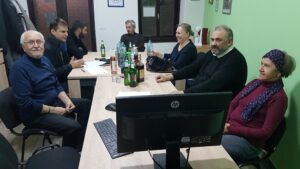
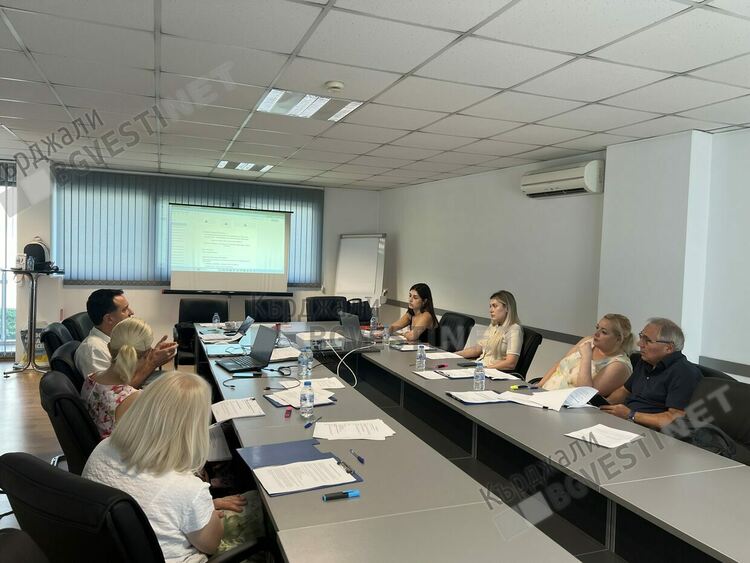
The meeting was hosted by the “Omega” Association, the project coordinator. Representatives from partner organizations Danube 1245 (Serbia) and iAgroCert (Greece) participated in the working sessions. During the three-day meeting, the partners discussed activity organization, management and coordination mechanisms, and the initial practical steps for project implementation.
A key focus was placed on launching a functional analysis of food security and food affordability in Bulgaria, Serbia, and Greece. The partners discussed a common methodological framework for conducting national studies, expert interviews, focus groups, and an analysis of best practices, all of which will serve as the foundation for subsequent project activities.
Another important topic addressed at the meeting was the preparation for the Balkan Forum on Food Security and Food Affordability, which is set to take place in Bulgaria. The forum is expected to bring together between 60 and 80 participants, with approximately half being international representatives from Balkan countries and European scientific and professional networks.
The forum is conceived as an international scientific and expert conference that will provide a platform for presenting research findings, studies, best practices, and innovative solutions in the fields of food security, sustainable food systems, and food accessibility. The program includes scientific panels, academic presentations, expert discussions, and the exchange of experience among representatives from universities, research organizations, public institutions, the business community, the agricultural sector, and non-governmental organizations.
“Food security is one of the most critical challenges facing Europe. We believe that sustainable solutions can only be achieved through partnerships between the scientific community, business, institutions, and the civil sector. SMART-FOOD offers an opportunity to build a Balkan network for the exchange of knowledge and best practices, creating tangible solutions with long-term impact,” stated Veselina Yurukova, Chair of the “Omega” Association and project manager.
During the meeting, the partners established a management and communication mechanism, adopted a shared coordination and reporting system, agreed on the use of a common digital workspace, and allocated initial tasks and deadlines.
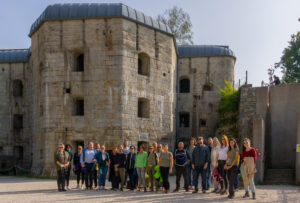
In addition to the working program, participants had the opportunity to explore the cultural and historical heritage of Plovdiv—one of the oldest continuously inhabited cities in Europe. The informal part of the meeting helped build stronger partnerships and trust among the organizations.
The organizers invite universities, research institutes, researchers, representatives from the public and business sectors, agricultural producers, non-governmental organizations, and all stakeholders working in the fields of food security and sustainable development to follow the project’s progress and participate in upcoming initiatives.
The partnership aims to transform the Balkan Forum into a sustainable international platform for scientific and expert exchange, fostering future joint research, educational initiatives, and practical solutions in the field of food security.