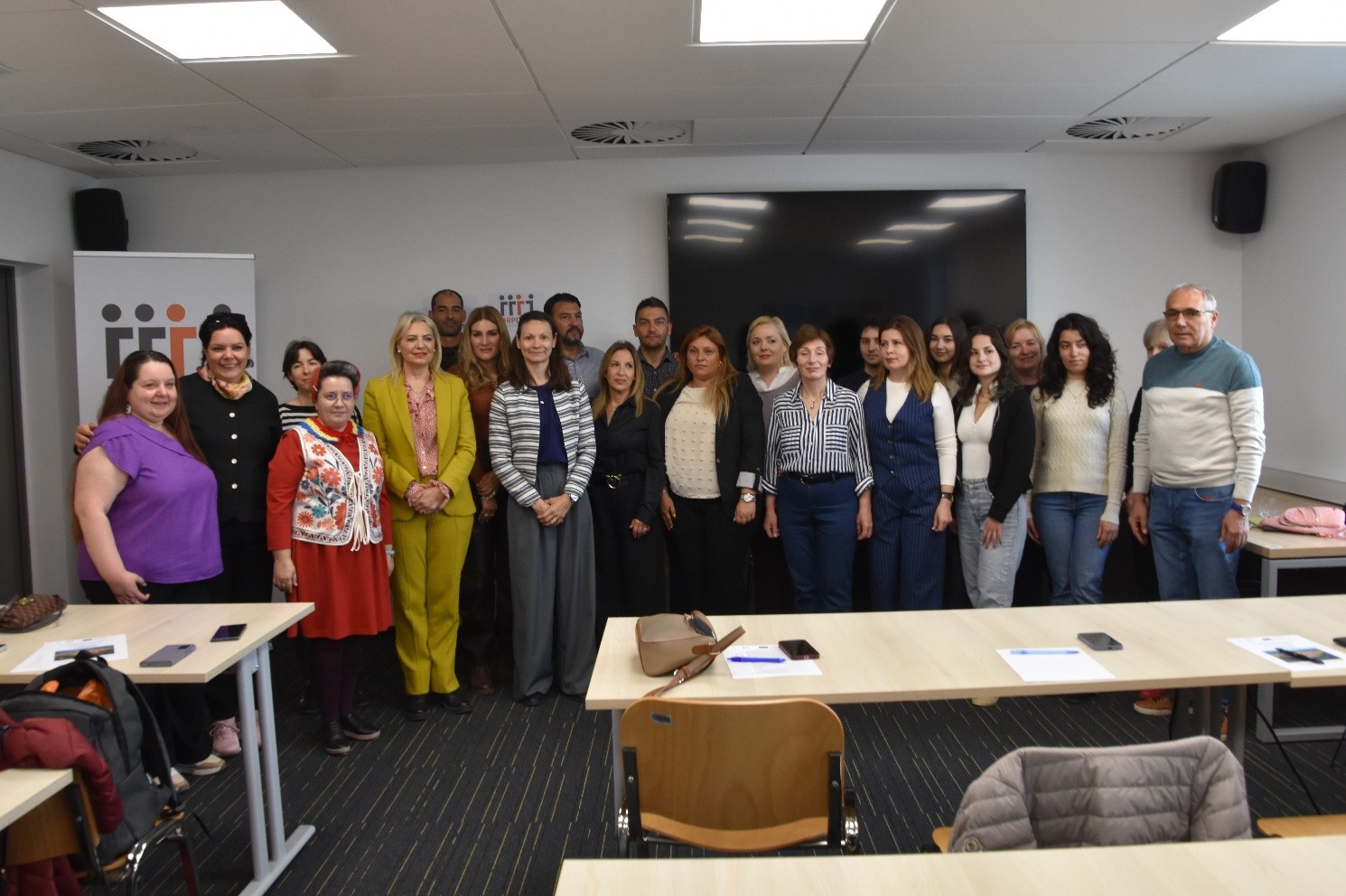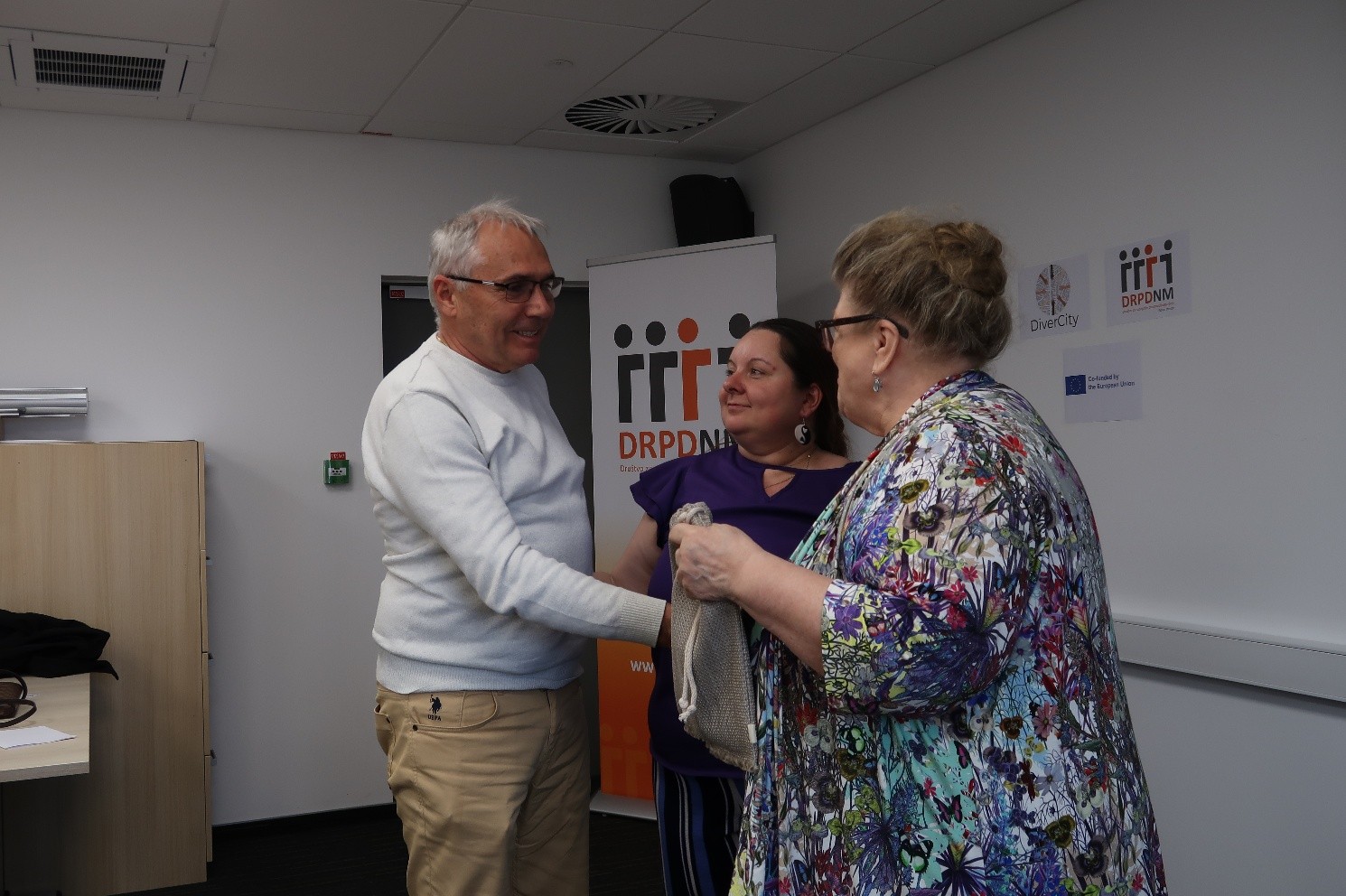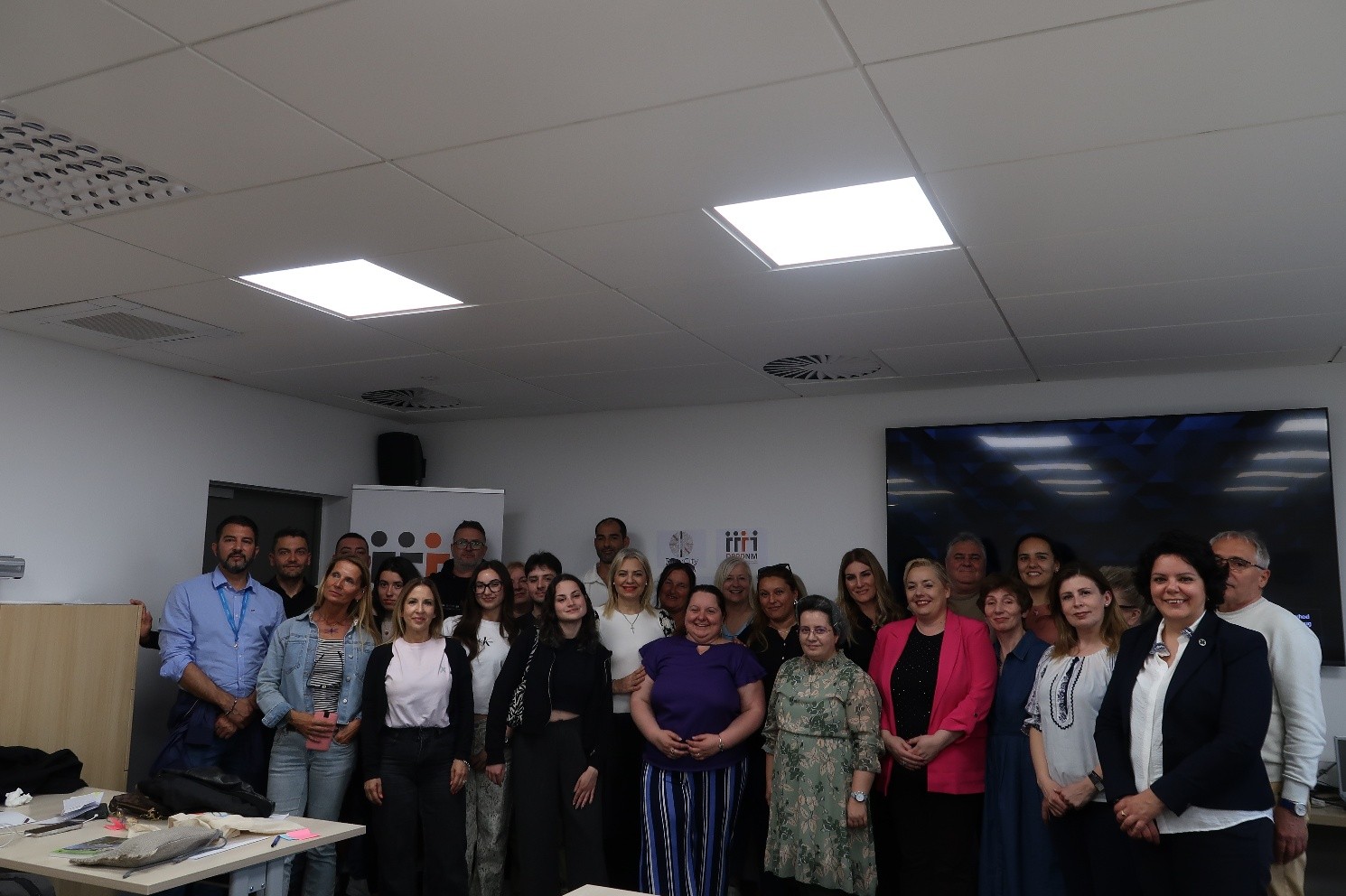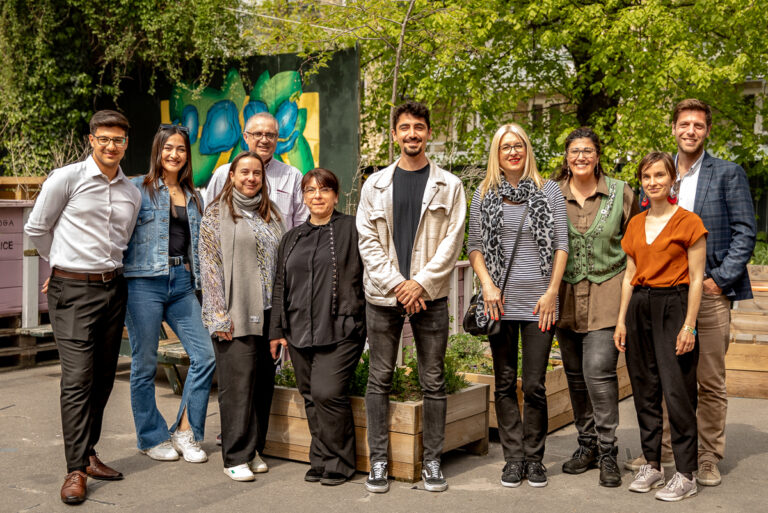
Society for the Development of Voluntary Work Novo Mesto (DRPDNM) successfully held the central international seminar of the European project DiverCity – Building Inclusive Societies. A two-day event masterfully led by Ester Snedec<br />13. and May 14, 2026 in Novi Mesto, gathered experts, youth activists and decision-makers from seven countries. Through experiential workshops that question prejudices, presentations of local integration practices and the Living Library, the participants successfully responded to the challenges of contemporary social inclusion and equality.</p><p>The DiverCity project, which is co-financed by the European program CERV (Citizens, Equality, Rights and Values), brings together partner organizations and local authorities from Greece, Italy, Albania, Romania, Cyprus, Serbia and Slovenia. Its main goal is to strengthen the capacity of local self-governments to transfer the theoretical concepts of justice directly into practice and everyday life on city streets.
Alliance of European Cities for Systemic Justice
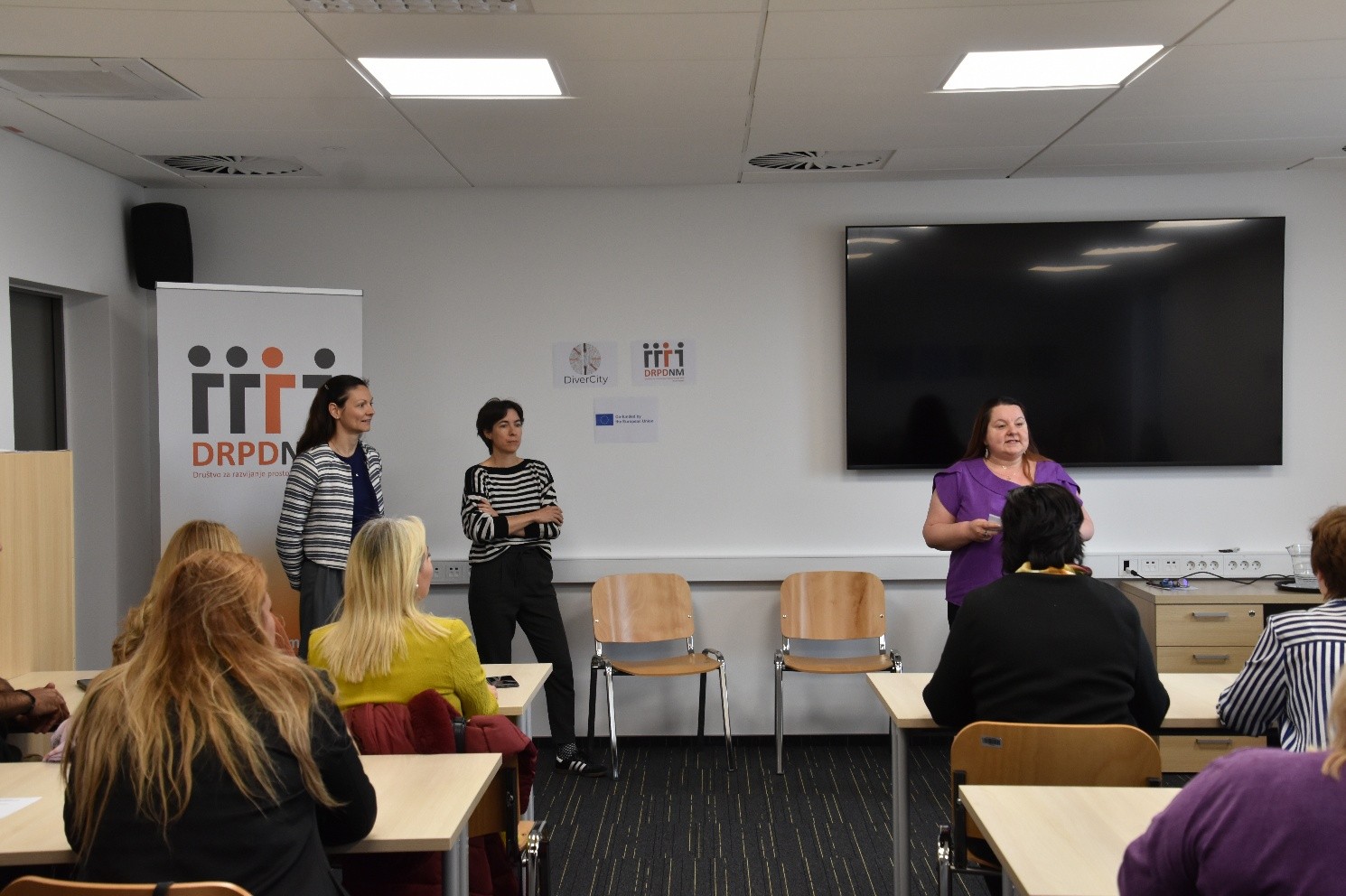
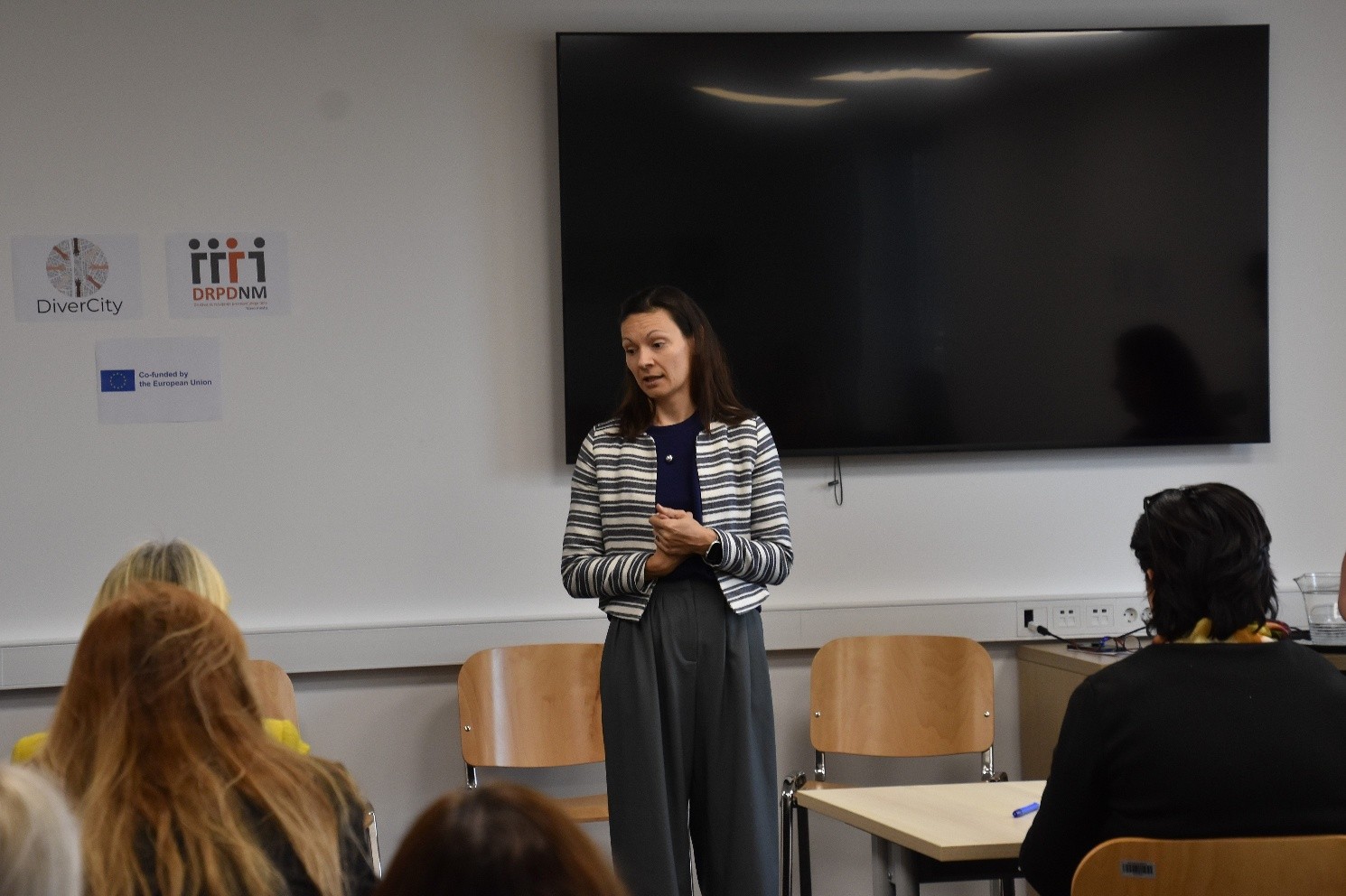
The event officially began with an address by the Deputy Mayor of the City Municipality of Novo Mesto, Sara Tomšič, who presented Novo Mesto and emphasized the importance of inclusive planning of local space and services. On behalf of the DRPDNM host organization, Tina Zigler warmly greeted the crowd, highlighting some of the association’s programs for the inclusion of vulnerable groups and two local Urbanka – the local office for urban renewal and the Forgotten Half of Novi Mesto.
National umbrella bodies for equality were then presented to the international audience, such as the Italian UNAR, the Greek ombudsman or the Slovenian advocate of the principle of equality, which complement the work of the foreign delegations present: the leading Greek partner Panelinios Sindesmos (municipality of Siyatista), the Italian municipality of Matino, the Albanian Center for Economic Intelligence (Korča), the Romanian association ASEL RO, the Cypriot municipality of Akamas and the Dunav 1245 organization from Sremski Karlovac in Serbia.
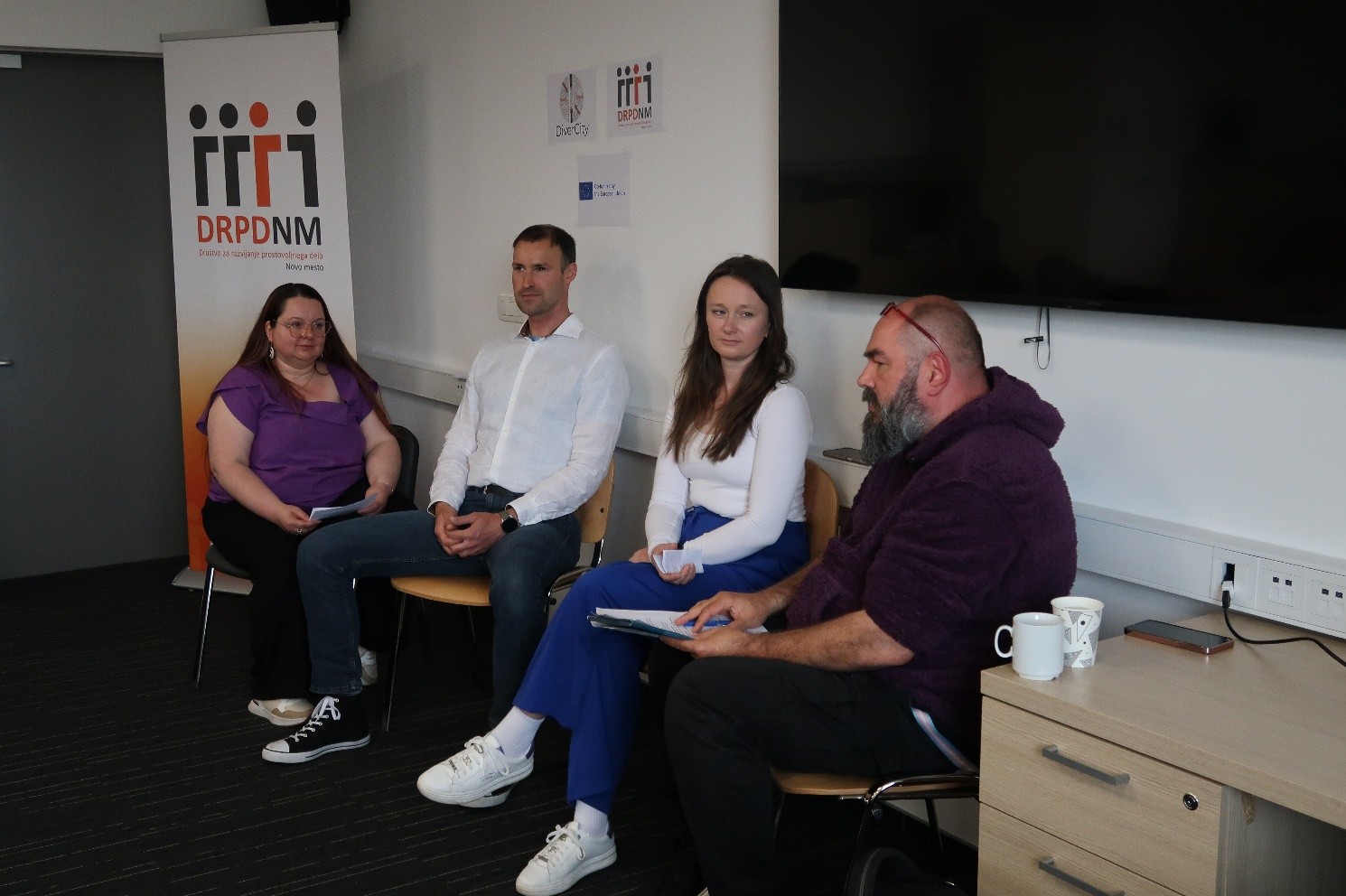
Round table: Where are the invisible barriers?
The central content pillar of the first morning was a round table with exceptional local guests who shed light on the concept of so-called “invisible barriers”
– barriers that do not exist in legislation, but in practice make the integration of marginalized groups more difficult every day:
– Mitja Blažič, an expert in the field of equality and representation of vulnerable groups and an independent consultant in the Advocate of the Principle of Equality, brought to the discussion an invaluable combination of personal and professional experience. As a former journalist and fearless human rights activist, he and his partner were the first in Slovenia to publicly register a civil partnership, paving the way for the elimination of systemic discrimination. He explained to those present the importance of analyzing legislation and helping local authorities to create a fairer environment.
– Matej Auguštin, an exceptional athlete (shooter, rider and erisoft player), employed at DRPDNM, proved with his life story that obstacles
they often exist only in our heads. Despite his blindness, he moves through the world with remarkable independence. He brought invaluable insight into
discussion on how the digital transformation of cities becomes either the greatest ally or the greatest obstacle, and pointed out that a “smart city” proves its intelligence only when it is truly accessible to everyone.
– Milica Tanasković, master of history who moved to Novo Mesto from Serbia, and today works as a project coordinator and indispensable intercultural mediator in DRPDNM. Her story is an inspiring example of successful integration. Through her own eyes, she shed light on the meeting of theory and reality on the ground – from providing educational assistance to children of immigrants to overcoming administrative obstacles that foreigners face upon arrival in a new community.
Cultural pulse and interactive presentation of the DRPDNM program
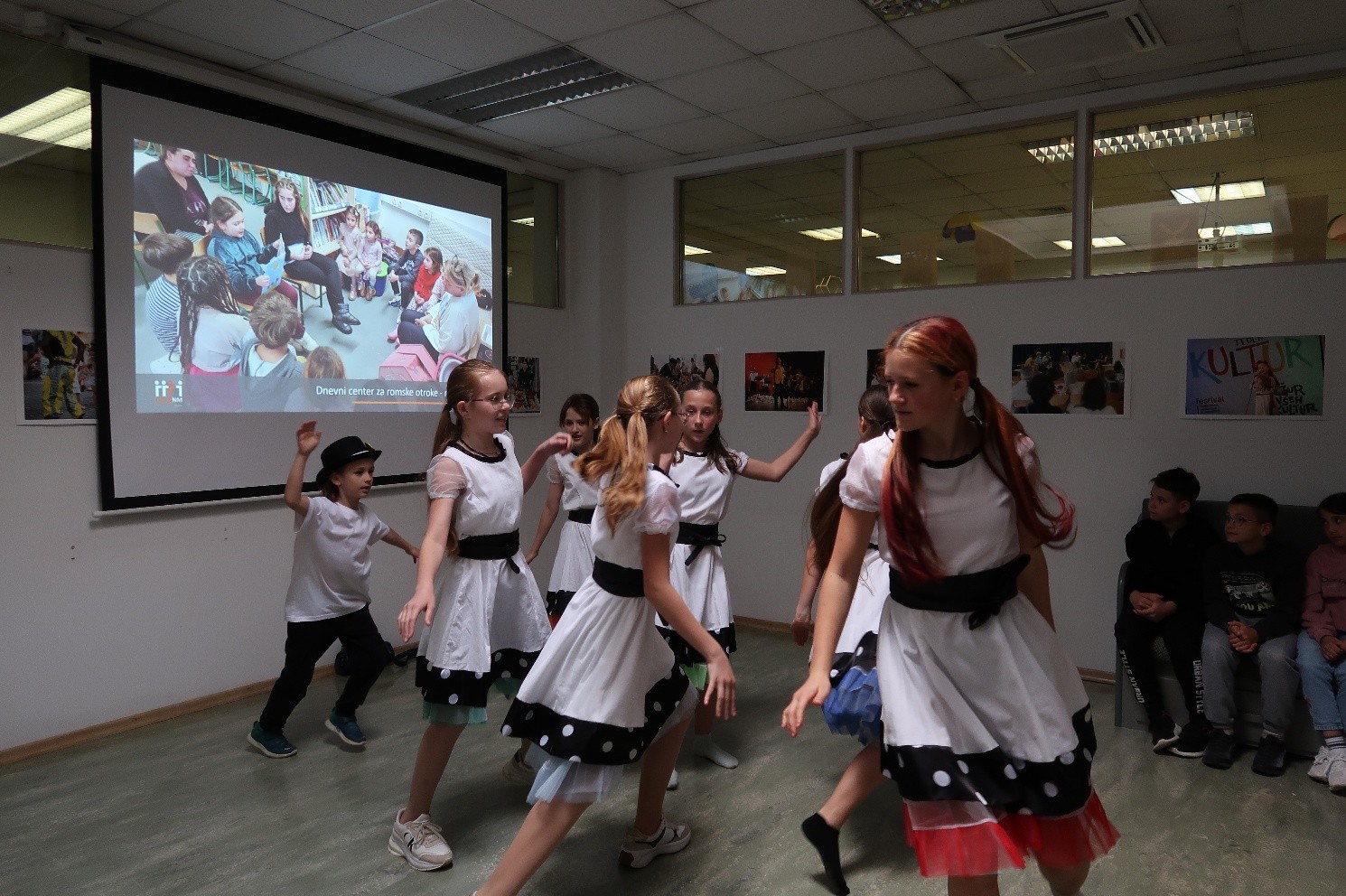
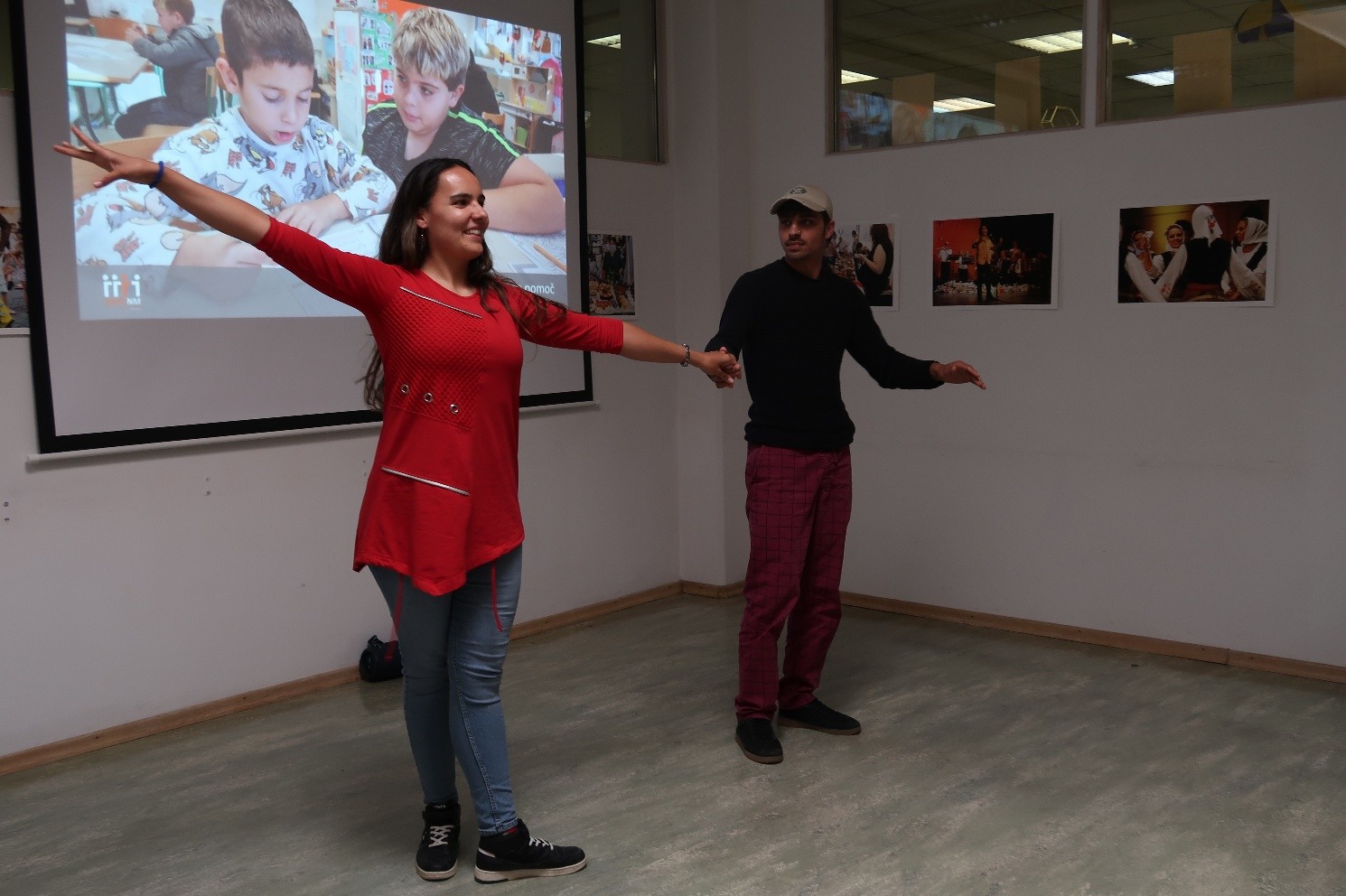
After lunch, the first day turned into a very dynamic and practical afternoon dedicated to the presentation of the rich programs of DRPDNM, which have been changing the social climate in the region for more than three decades. A wonderful cultural and emotional highlight of the afternoon was provided by the dance group DRPDNM led by Daniela. Through expressive play and exceptional energy, the performers demonstrated the power of art as a universal language of integration, mutual acceptance and breaking down social barriers to the international guests in the most beautiful way possible – without words.
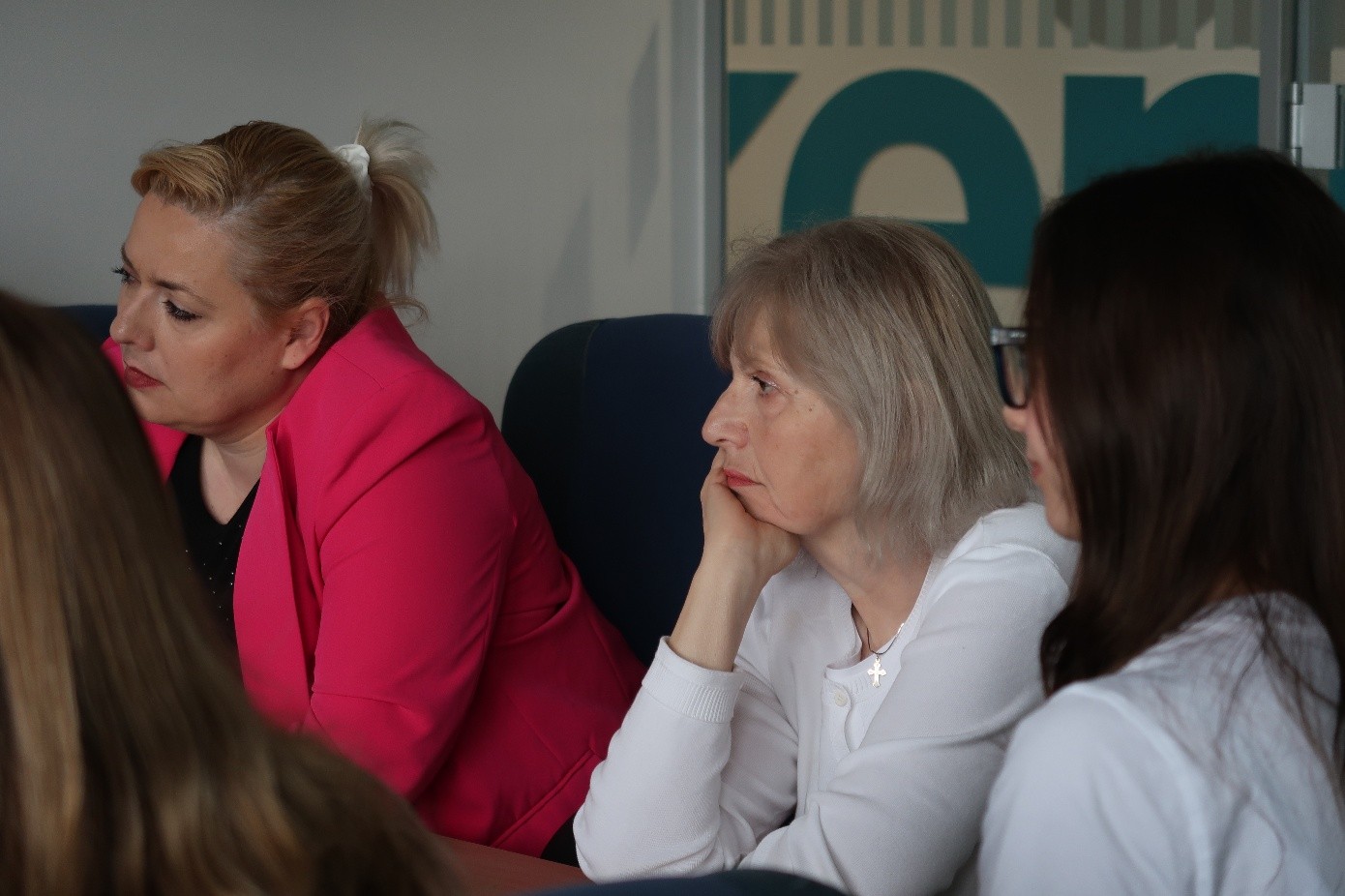
The organizers enthusiastically emphasized the extremely high level of participation and the active role of young people and youth workers throughout the seminar. The young participants were not just passive listeners, but with their critical thinking, direct questions to decision makers and innovative proposals, they breathed a special dynamic into the international event.
They participated both in the analysis of systemic barriers and in practical workshops, proving that they are a key engine of social change and an indispensable link in building a more tolerant future in their local environments.
Experiential Learning: The Stereotype-Breaking Game and the Living Library
The second day started with an extremely intense and resonant interactive game “Breaking stereotypes”. The exercise was designed so that the participants received a sticker on their forehead with a certain social role (everything from the president of the country to a homeless person, a blind person or a seasonal worker), which they did not see themselves, but others treated them in accordance with this label. This exercise served as a direct, emotional confrontation with my own unconscious biases. This was followed by a deep reflection focused on four key aspects: the loss of humanity when labeled, the sense of inferiority of the vulnerable and the transfer of these insights to official offices and everyday work environments.
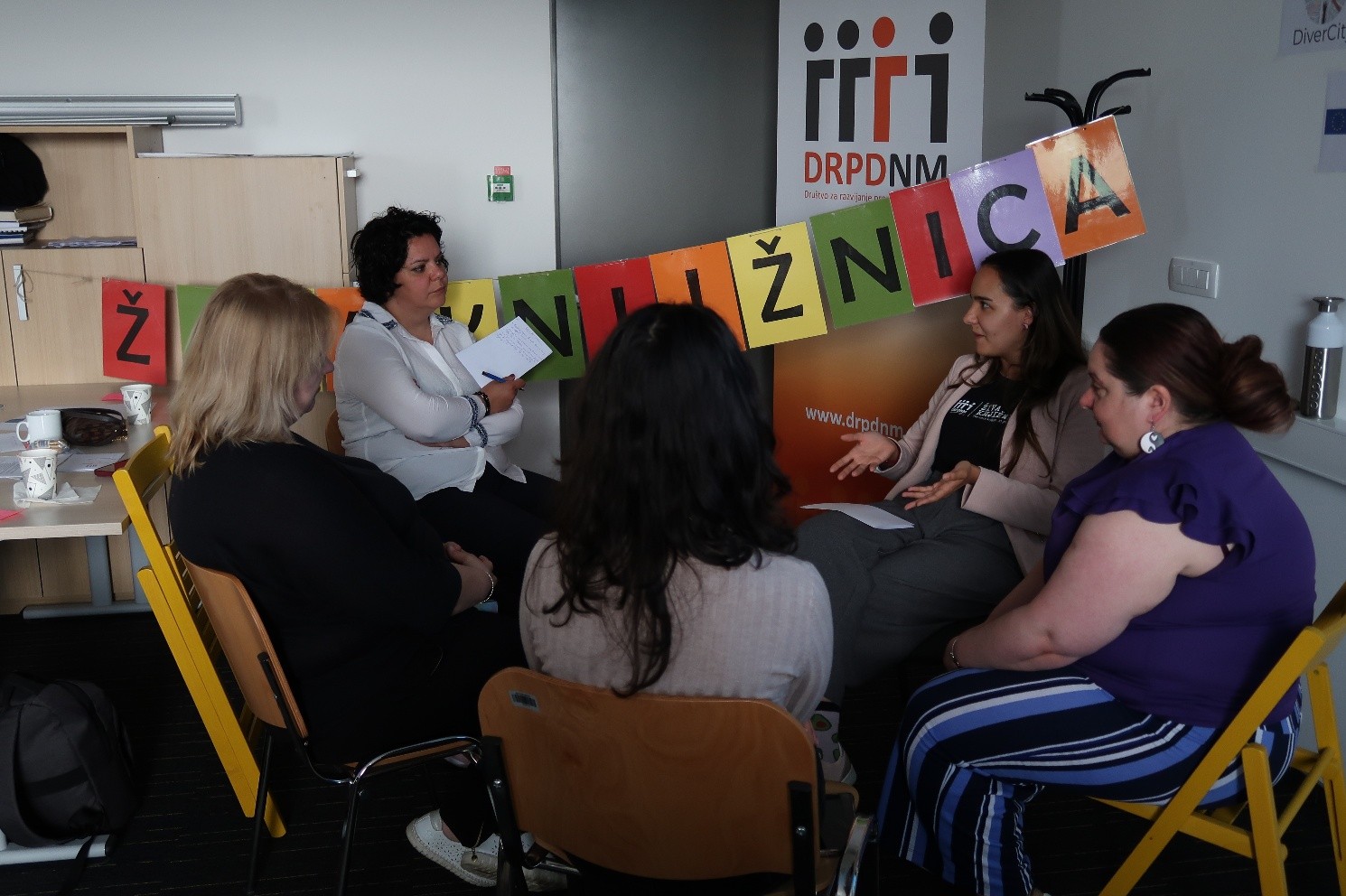
Maja Žunic Fabjancic then presented the methodology of the Living Library under the slogan “Don’t judge a book by its cover”. She explained all the background, safe reading rules and instructions on how local authorities can successfully implement this proven concept in their cities to permanently promote tolerance. “Living books” were individuals from various vulnerable backgrounds who shared their personal destinies in conversations with the participants. The international guests showed great interest in reading, and the following “books” were available to them: a Muslim woman, a blind shooter, a dancer from Venezuela, a Buddhist traveler and a refugee from Ukraine.
Seeing the city through the eyes of the "Forgotten Half"
The afternoon was devoted to field work and discovering Novi Mesto from a completely new perspective. Led by Klavdija Kotar, the participants went on a guided walk along the “Forgotten Half of Novi Mesto” trail. The walk is designed as an exploration of public space through the prism of neglected social groups and the historical memory of women who significantly shaped the city. The participants thus directly recognized in the urban environment how social exclusion or inclusion is reflected in architecture, public monuments and collective memory.