'/%3E%3C/svg%3E)
'/%3E%3C/svg%3E)

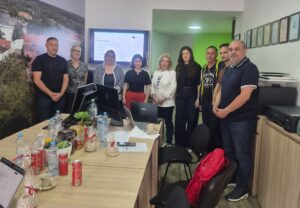
From 6 to 8 November 2025, the city of Križevci (Republic of Croatia) hosted the international conference “Cooperation towards Sustainable Practices”, implemented within the framework of the European project EU-ECO, co-financed by the European Union under the CERV – Citizens, Equality, Rights and Values programme, Town Twinning component.
The three-day event brought together more than 200 participants from seven countries – Croatia, Slovenia, Italy, Hungary, Bulgaria, Serbia and Greece – creating a space for knowledge exchange, presentation of good practices and dialogue on common European values and environmental challenges.
Križevci – a local community an example of climate neutrality
The city of Križevci is already recognized as one of the leaders in the region in terms of energy transition. The city’s ambitious vision to achieve full climate neutrality by 2030 was the main motive for this particular environment to host the conference.
- Participants had the opportunity to learn about:
- electric buses powered by renewable energy,
- photovoltaic power plants in public institutions,
- local initiatives to reduce the CO₂ footprint,
- programs to improve energy efficiency in schools, kindergartens and sports facilities.
These activities are an example of how local governments can practically implement European green policies in their environments.
Conference program – three days of dialogue, learning and collaboration
Day 1 — Introduction to local sustainability examples
The first day of the event was reserved for the arrival and accommodation of the participants. On the same day, the attendees were presented with the fully electric city buses and the concept of free rides for all citizens. The electric buses use electricity generated from municipal photovoltaic power plants installed on city-owned buildings, such as kindergartens, primary schools, sports halls, etc.
Day 2 — Main conference day
The second day was dedicated to plenary sessions, panels, practical examples and activities for young people:
The CERF programme and EU policies: The participants were first introduced to the CERF programme (Citizens, Equality, Rights and Values) and the policies of the European Union. They focus on the promotion and protection of EU values and fundamental rights, equality of all citizens, volunteering, environmental protection and other values promoted by the CERF programme.
Presentation of the EU ECO project: Afterwards, Krunoslav Đurec presented the EU ECO project. He briefly explained that the purpose of the project is to empower citizens to actively participate in democratic processes at the level of the European Union. The project is designed to foster a sense of belonging to a European identity. The key objective is to improve citizens’ knowledge of the European Union and its policies, with a special emphasis on environmental policy and the objectives of the European Green Deal.
Presentations of partner organisations: This was followed by presentations by partner organisations, detailing their contributions to the implementation of EU policies related to civil society development and environmental protection.
Panel discussion and best practices: A panel discussion was then opened, preceded by a presentation by Ivana Dubravec from the city administration of Križevci. Križevci is a city that strives for climate neutrality by 2030. The presentation included a short documentary film titled “Križevci – the city with the smallest climate footprint in Croatia”.
Resilient Infrastructure: After a panel debate, Ivana Šatrak presented on the topic of building resilient social infrastructure.
Cultural Exchange and Geocaching: After lunch, a photography tour was held, where high school students from a technical school in Novi Sad, Serbia, presented the connections between Croatia and Serbia through a short photography exhibition “My European City”. The day ended with a geocaching game, a city tour and highlighting elements of the common history between the people of Križevci and all the countries represented in the project.
Evening Program: In the evening, after dinner, the traditions and customs of the people of Križevci were presented, accompanied by a concert of traditional tambura music.
Day 3 — Thematic roundtables and workshops
The last day focused on dialogue, expert discussion and practical skills:
Roundtable “Smart Organic Food Production” – the project “Zdrav Križevci” was presented, an innovative model of connecting organic producers and consumers through mobile applications for smartphones and web platforms.
Composting workshop – participants of different ages learned about proper composting and the circular economy.
Interactive lecture by climate change experts – the importance of environmentally responsible agriculture and its connection with the EU Charter of Fundamental Rights.
Film forum – a documentary film on climate change and the role of citizens in the fight for sustainability.
Partnership roundtable and signing of the Agreement on Future Cooperation – the partners agreed to continue working together and develop new initiatives.
The significance of the event for citizens and local communities
The conference made a significant contribution to:
• strengthening citizens’ understanding of European values
• raising awareness of climate change and sustainability
• connecting local communities from seven European countries
• empowering young people for active participation in society
• exchanging good practices and establishing new partnerships
• promoting democracy, solidarity and multicultural dialogue
Participant evaluations showed a high level of satisfaction with the program and organization.
Official materials and results
The following were prepared as part of the event:
• Conference Agenda
• Participant Signature Lists
• Evaluation Questionnaires and Surveys
• Press Release
• Agreement on Future Cooperation
• Video Interviews with Participants
Materials will be made publicly available in accordance with the project guidelines.
Together towards a sustainable European future
The international conference “Cooperation towards sustainable practice” represents an important step in strengthening local capacities, increasing citizen awareness and supporting European goals in the field of sustainable development and climate neutrality.
Citizens had the opportunity to see “Europe in action” – through local examples and cooperation between people of different cultures, professions and generations.